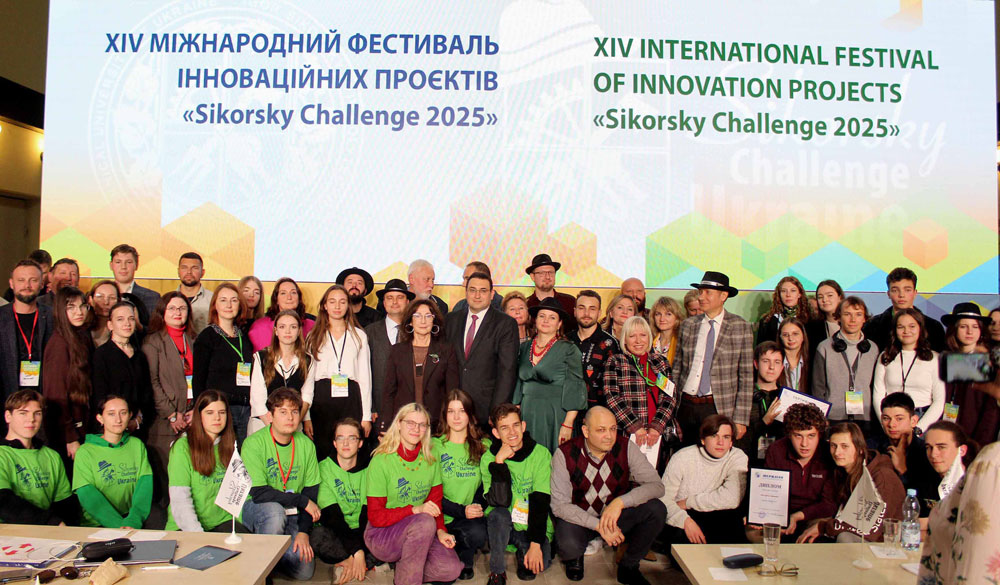

The XIV International Festival of Innovative Projects “Sikorsky Challenge 2025”, which took place at Igor Sikorsky KPI from October 28 to November 2 this year, was dedicated to the issues and ways of post-war revival, reconstruction, and further development of Ukraine.
"The 14th Sikorsky Challenge festival, despite not being an anniversary event, is a landmark occasion. This is the fourth festival to take place amid a full-scale invasion,“ said Anatoliy Melnichenko, rector of Igor Sikorsky KPI, at the opening of the festival. ”This festival constantly confirms that the key to the success of our country and our economy is innovation and human resources. It is especially important for us that our university is one of the drivers of development in the field of innovation, because we train those who develop innovations, those who implement them, and those who create scientific products. At our university, we strive to shape the minds of innovators, not just people with good engineering knowledge and skills, but also those who think in a way that will enable us to truly achieve success.
The festival and its program
The war has forced us to realize new realities and formulate strategic tasks for the post-war period of Ukraine's recovery and development. At the same time, the reconstruction, or rather the construction of a new modern Ukraine with a modern economy capable of responding quickly to the ever-changing challenges of the surrounding world, must be based on innovative technologies and the rapid and effective implementation of new developments in all areas of the country's development that are recognized as priorities. That is why the main event of the festival was, of course, the competition of innovative start-up projects, or more precisely, the final of this competition, in which the projects whose development teams will receive support from Ukrainian and international funds, accelerators, and investment companies were determined. In general, this has already become a tradition of the festival, because it was for this competition that it was conceived 14 years ago. Since then, the festival and the startup project competition within its framework have become one of the most important annual events in the field of Ukrainian innovation. The final of the innovative startup project competition was held in five sections, which are indeed related to industries that are very important for our country and will most likely remain a priority for Ukraine after the war. These are section 1 “Aviation, Space, Defense, and Security,” section 2 “Energy Sustainability and Security, Environmental Safety, Green Chemistry,” section 3 “Biomedical Engineering and Human Health,” section 4 "Digital Country, Industrial High Tech, agrotech,“ section 5 ”Sikorsky Challenge Junior" (in which the youngest participants in the competition, schoolchildren, competed).
Of course, one should not think that only projects aimed at post-war realities were considered in the sections. In fact, there were also projects that could already serve Ukraine's defense very well today, as evidenced by the name of the first section. And during the work of other sections, projects that are quite relevant for today were also demonstrated.
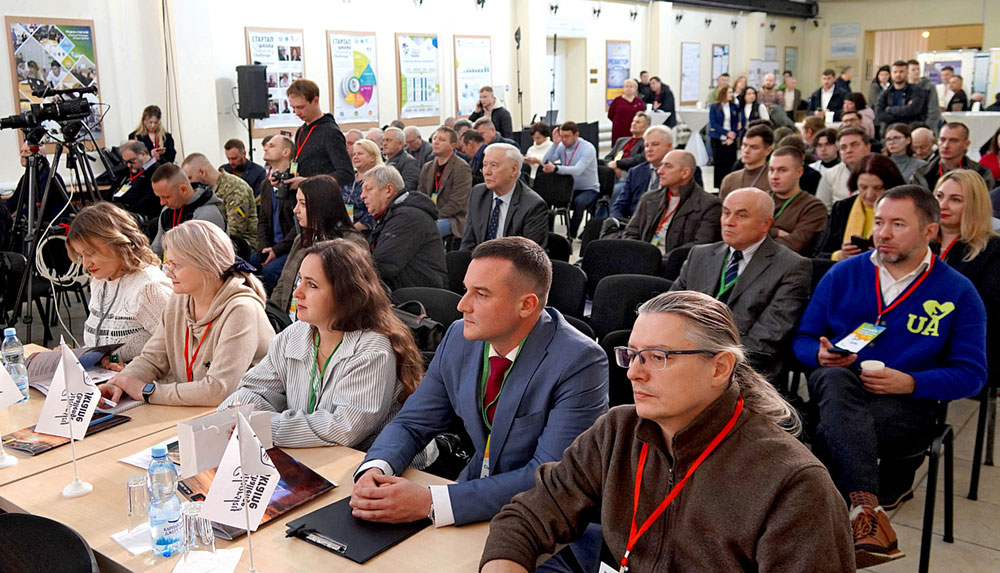
However, as always, the festival program included not only a competition of innovative projects, but also other events: the forum “Innovations in the Defense-Industrial Complex,” the International Forum “International Support for the Innovative Transformation of Ukraine,” the forum of participants in the Sikorsky Challenge Ukraine innovation ecosystem "Innovative Development of Ukraine. Interaction between universities, investors, funds, manufacturing enterprises, and government agencies,“ and an exhibition of startup projects and breakthrough scientific and technical developments. There was also a demonstration of the interactive capabilities of the ”Sikorsky Challenge Immersive" virtual exhibition for international partnerships. The festival program concluded with the annual Global GreenChem Hackathon, whose participants, using the principles of green chemistry, seek (and, we might add, find) innovative and environmentally safe solutions to real challenges in the chemical industry.
In short, all the festival's activities were aimed at identifying the most promising developments for implementation and creating conditions for the successful innovative activities of their authors. Moreover, innovative activities not for, so to speak, “self-expression,” but for solving problems that are relevant to Ukraine.
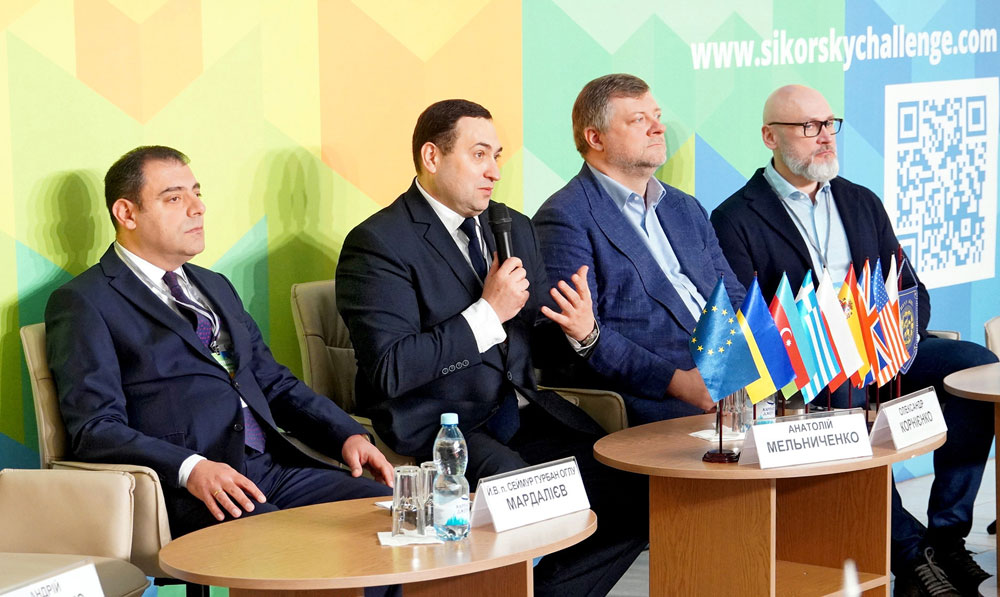
It should be noted that technical universities, including Igor Sikorsky KPI, are the best environment for such activities. This was mentioned in his welcoming speech to participants and guests by the First Deputy Chairman of the Verkhovna Rada of Ukraine, Chairman of the Supervisory Board of KPI Oleksandr Kornienko. He began his speech with a statement that was met with applause: "We are gathered here just three days after the Verkhovna Rada made a historic decision to recommend that the government and the Ministry of Finance increase the salaries of university teachers by 50% over the next year. This is the first time this has happened in many years. And this is, in fact, a very important step during the war. It was initiated by the President of Ukraine and supported by the Chairman of the Verkhovna Rada. And let's be honest, this should have been done a long time ago... As Chairman of the Supervisory Board of Igor Sikorsky KPI, I understand very well that it is engineering education that shapes our defense capabilities, digital state, and energy security. Without young engineers who try, make mistakes, test, and create, there will be no progress." He also emphasized that holding the Sikorsky Challenge festival is a tradition that is particularly important today for enhancing our country's defense capabilities and ensuring adequate responses to challenges related to energy and other sectors of the economy.
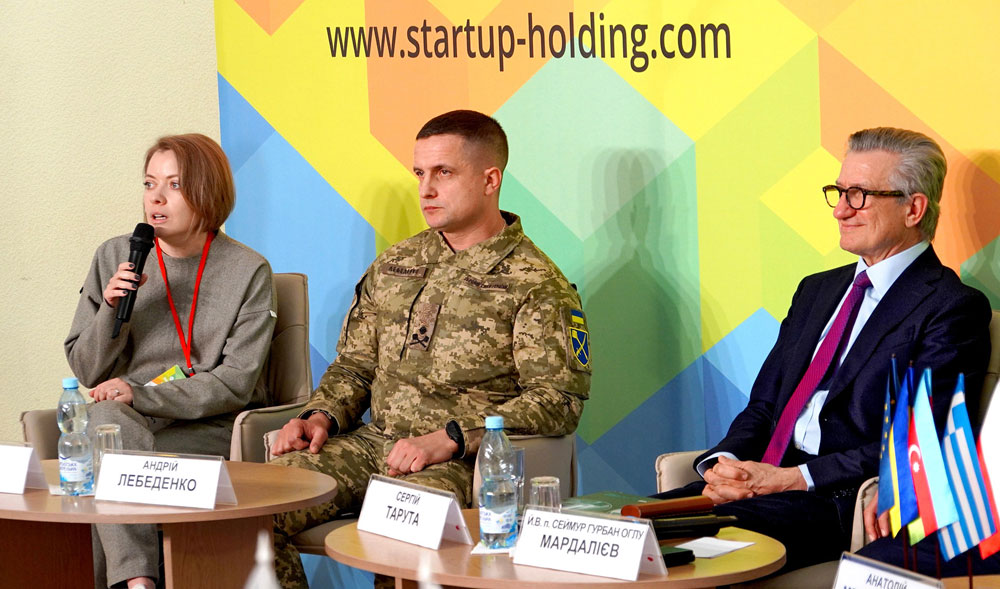
It is worth noting that the festival participants were greeted by many distinguished guests: a friend of our university, who recently gave a lecture to its students and staff, Ambassador Extraordinary and Plenipotentiary of the Republic of Azerbaijan to Ukraine Seymour Gurban oglu Mardaliev (who, incidentally, greeted the festival participants in Ukrainian); Deputy Minister of Digital Transformation of Ukraine Oleksandr Bornyakov (online); Director of the Department of Information and Communication Technologies of the Kyiv City State Administration Viktoria Itskovich; Chairman of the International Jury, a person who has participated in all Sikorsky Challenge festivals since the very first one, Vic Korsun (online from Philadelphia) and others.
During the festival, a trilateral Memorandum of Cooperation was signed between Igor Sikorsky KPI, Sikorsky Challenge Holding, and the National Aerospace University “Kharkiv Aviation Institute,” which thus became a member of the Sikorsky Challenge Ukraine Ecosystem.
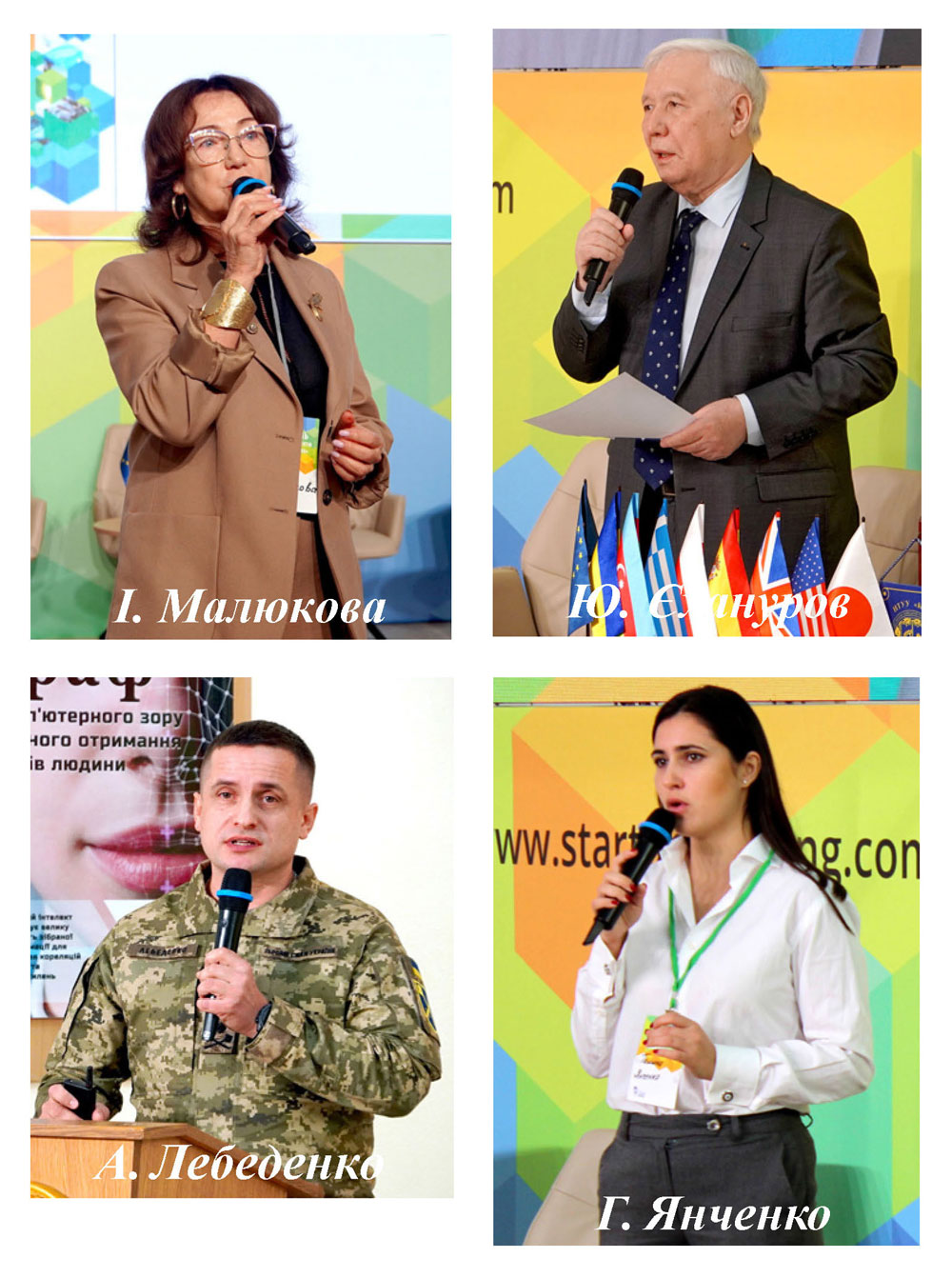
“This year's festival is distinguished by the fact that the quality of the projects and their level have become significantly higher,” Inna Malyukova, head of the Sikorsky Challenge Innovation Ecosystem, told Kyiv Polytechnic. "We are working to overcome the enormous challenges of war. But we are developing, and innovative Ukraine is developing. This is evident in the projects and in the people who participate... Another very big step and impetus for the development of innovation is what we have just announced—the creation of the Sikorsky Challenge Accelerator in the United Kingdom. Together with a large investment and innovation fund that fully supports the development of both our system and Ukrainian startups. They are ready to invest in them, ready to create joint ventures there, in the jurisdiction of the UK, but also joint ventures with the UK here, in Ukraine."
The latter needs to be discussed separately. According to Inna Malyukova, Sikorsky Challenge Accelerator LTD (SCU) is a joint Ukrainian-British venture whose goal will be to support and scale startup projects, i.e., to promote the innovative transformation of Ukraine's economy, defense, and security. As the name suggests, the main general partner of this accelerator is Igor Sikorsky Kyiv Polytechnic Institute. The accelerator will bring together startups, investors, and partners through a hybrid model of financing and training, using the Sikorsky Challenge Immersive model as a digital showcase for projects. Therefore, it is planned to hold competitions and select startups in Europe, the United States, and Japan. The areas of focus will be defense and security, medical engineering and health, renewable energy, and digital infrastructure. At the same time, SCU will act as a bridge between the Sikorsky Challenge Ukraine Innovation System and Innovation FUND (UK). “All this is not so that we can develop innovations in the UK, but so that they can invest in our startups,” emphasized Inna Malyukova.
Ukraine's defense industry: a thirty-five-fold increase!
Returning to the festival events, it is impossible to ignore the aforementioned forum “Innovations in the Defense Industry.”
It was moderated by the director of the Igor Sikorsky KPI Institute of Advanced Defense Technologies, the prime minister of Ukraine in 2005–2006, and the minister of defense of Ukraine in 2005–2006, Viktor Kuchma. It was moderated by Yuriy Yekhanurov, director of the Institute of Advanced Defense Technologies at Igor Sikorsky KPI, Prime Minister of Ukraine in 2005–2006, Minister of Defense in 2007–2009, and People's Deputy of Ukraine for four terms. In his opening remarks, he outlined some key issues that need to be addressed in the defense industry today. One of his proposals was an initiative to create a Center for Monitoring and Analysis of Cyber-Kinetic Operations in Ukraine. Yuriy Yekhanurov announced that a memorandum has already been prepared and will be sent to the relevant government authorities. The Center's function will be to monitor and analyze materials on hostile cyber activity with parallel or subsequent kinetic attacks by the enemy on various objects. "Today, accidents are happening in Western countries, blackouts are occurring in Spain and Portugal, and transport accidents are happening in France and Germany. the fact that drones are now “suddenly” flying in there is a consequence of the fact that they (Europeans – author's note) do not invest in this at all and do nothing themselves to probe everything that is happening around them. Ukraine has started to do this today. Our Armed Forces show that we see a lot in this world, and we would like this to be used together," he explained.
Given that the meeting was attended not only by industry representatives and startup developers, but also by high-ranking government officials and members of the Ukrainian parliament, this proposal was bound to be heard by those who directly influence decisions of such importance. Incidentally, the fact that military experts take this event very seriously was evidenced by the participation in the festival and the speech at this forum by the Deputy Commander-in-Chief of the Armed Forces of Ukraine, who is responsible for innovation, i.e., for the technological component of the army and combat systems, Brigadier General Andriy Lebedenko.
Another important area outlined by the director of the Institute of Advanced Defense Technologies at KPI, which needs to be addressed urgently, is the use of artificial intelligence technologies (which are now indispensable), but with the mandatory condition of adhering to certain rules and serious cybersecurity measures.
There were practically no mediocre speeches at the forum. Therefore, it is simply impossible to even briefly touch upon everything that the speakers said in this newspaper. However, it is important to mention one figure mentioned in her speech by Galina Yanchenko, Member of Parliament of Ukraine and member of the Verkhovna Rada Committee on Economic Development: "In three and a half years of full-scale war, Ukraine's defense-industrial complex, its capabilities and power have grown thirty-five times! No other sector of the economy has shown such growth in the entire history of our country's independence. I believe this is a phenomenon. And this phenomenon is something we can not only be proud of, but also promote. It can become our trump card, including in major geopolitical processes."
A kind of continuation of her speech was the speech by Andriy Demchenko, Director General of the Public Union “League of Defense Enterprises of Ukraine.” In particular, he drew the attention of those present to the fact that innovation has become the main driver of the state's defense. “It is not quantity, but technological quality that now determines the results on the battlefield,” he stressed. At the same time, he outlined the following steps that need to be taken: the first is stable funding for R&D, including through state programs; the second is ensuring the protection and development of engineering capital—education, recruitment, and fair competition; the next is expanding cooperation programs with international partners and localizing technologies in Ukraine; further—deregulation and simplification of procedures for rapid production and implementation of innovations, etc. He concluded his speech with the words: “If Ukraine secures its status as one of Europe's technological leaders today, it can play a significant role in shaping the continent's new security architecture tomorrow.”
In fact, every speaker at this forum could be quoted, as could everyone who spoke at the International Forum on International Support for Ukraine's Innovative Transformation and at the Forum of Participants in the Sikorsky Challenge Ukraine Innovation Ecosystem on Ukraine's innovative development and cooperation in this area between our universities. However, let us repeat, there is not enough space in the newspaper for this.
About the competition for innovative startup projects and its winners
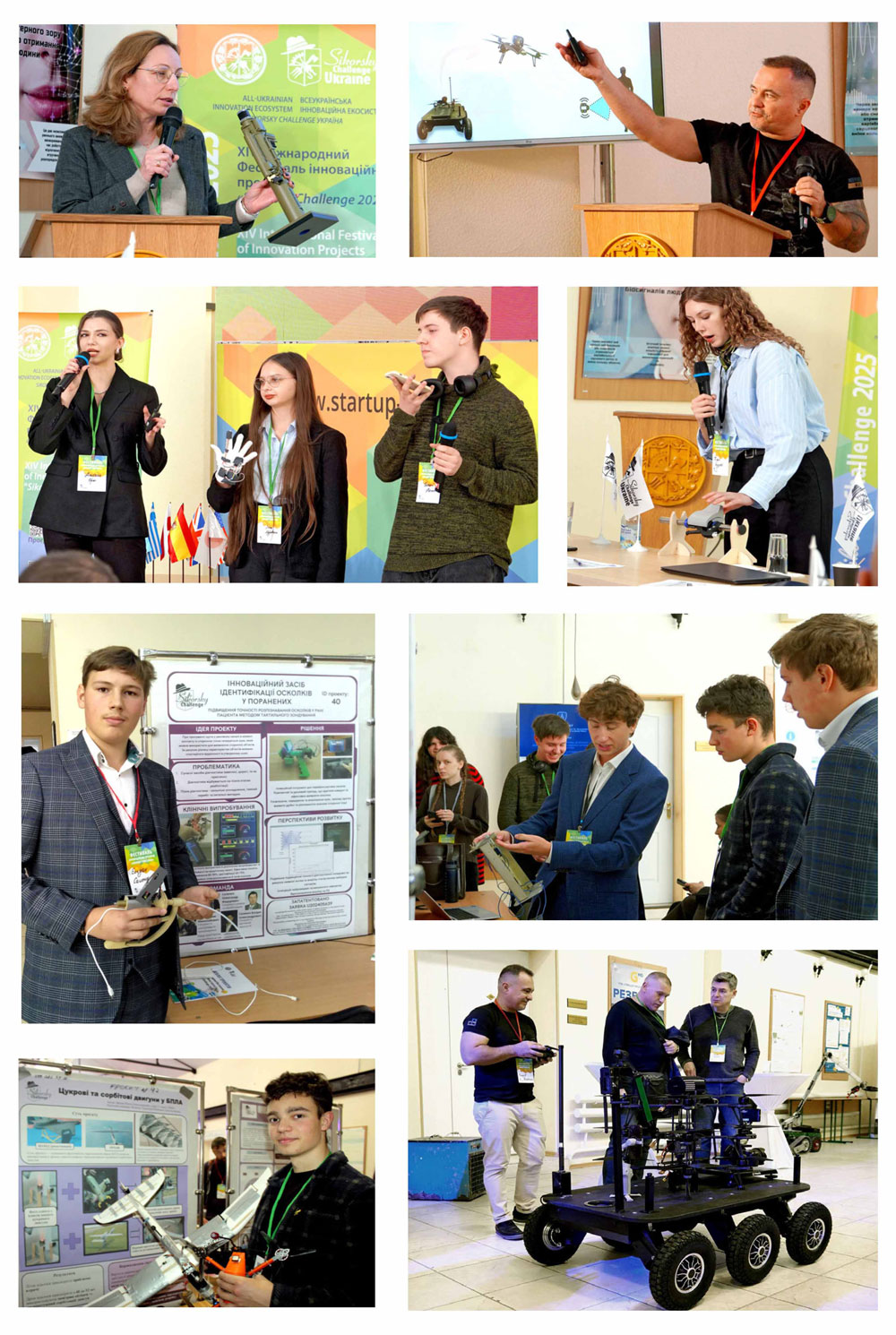
Let's turn to the competition for innovative startup projects. According to Serhiy Serhienko, the permanent host of the festival events throughout the festival days, 126 project applications were submitted for participation. The jury selected 87 of them for the final round. Teams from 24 cities in Ukraine represented 71 universities and 9 enterprises. Eighteen entrepreneurs and 25 schoolchildren also made it to the final round. The projects were divided into sections as follows: Section 1 “Aviation, Space, Defense, and Security” – 28 developments, Section 2 "Energy Sustainability and Security, Environmental Safety, Green Chemistry“ – 8, Section 3 ”Biomedical Engineering and Human Health“ – 16, Section 4 ”Digital Country, Industrial High Tech, Agrotech“ – 11, and Section 5 ”Sikorsky Challenge Junior" – 24. A total of 225 participants presented their projects directly at the university, while 52 contestants presented them online. It is noteworthy that the vast majority of the finalist projects, even those that appear to be purely peaceful in nature, include a component for use in the defense of the country or for the treatment and rehabilitation of soldiers who have been wounded or maimed in the war.
It is noteworthy that many strong projects were submitted to the competition by developers from cities that are almost constantly under rocket and drone attacks by the Russians – Kharkiv, Sumy, Odesa, and others. Moreover, some of these projects won in individual nominations in their sections.
More than 40 experts from different countries participated in the work of the international jury (mainly online).
The finalists' works have been compiled into a catalog, which contains abstracts of each project and brief information about their authors and the cities where the project teams are based. As usual, this catalog will be posted on the Sikorsky Challenge Ukraine Innovation Ecosystem website (https://startups2025.sikorskychallenge.com), so readers can check them all out.
The teams presented their projects mainly in the form of pitches (in person or remotely using telecommunications), although information about a number of interesting developments was also posted on stands, where it was possible to talk to their authors.
The jury evaluated the startup projects not only by section but also within each section for the nominations “Best Startup Idea,” “Best Startup Technology Solution,” “Best Startup Solution to Customer Problems,” and “Best Startup Business Model,” and then determined the winner in each section. Given the number and variety of projects submitted to the competition and the diversity of their topics even within the relevant section, there were quite a few such notable developments. At the awards ceremony, the jury members spoke about the high quality of the finalist projects and how difficult it was to choose the best among them.
Winners and prize winners
Let's name only the winners of this competition by section.
So, in the section “Aviation, Space, Defense, and Security,” the team of developers of the startup project “UMP-2 Snail,” presented by one of the Kyiv companies, was recognized as the best among 28 finalists. The project is dedicated to the development of an unmanned robotic system that meets all modern safety and efficiency requirements and has unique characteristics. The developer company creates advanced technologies to save the lives of Ukraine's defenders and increase the effectiveness of military operations (project readiness level TRL9 – launch of serial production and sales).
In the section “Energy Sustainability and Security, Environmental Safety, Green Chemistry,” the winner was the UASILICA project team (Odesa, Kyiv, Ivano-Frankivsk, Kaunas). This development is designed to help energy companies and agricultural companies avoid paying for the disposal of the waste they generate thanks to “green” technologies and to convert waste into adsorbents for the chemical, food, and light industries (project readiness level TRL5 – prototype components or assemblies developed and tested).
In the “Biomedical Engineering and Human Health” section, this year's winner was the team behind the project “Innovative means of identifying shrapnel in wounded patients.” As part of this project, an innovative tool for checking wound channels was developed. The authors found that the controlled signals were functionally determined by the shape and type of foreign objects in them with a probability of 75-80%. As one of the developers explained, thanks to this conditionality, this device can be used to recognize metal, wood, plastic, glass, and bones (project readiness level TRL7 – the prototype has been tested in a working environment).
The winner in the “Digital Country, Industrial High Tech, Agrotech” section is the team behind the startup project “Underground Storage Facilities Made of Soil Concrete” (Kyiv), which proposes an innovative technology for the construction of underground storage facilities made of soil concrete, involving a new application of jet grouting for soil consolidation around the perimeter of an underground structure (project readiness level TRL1-3).
The winner of the fifth section of the Sikorsky Challenge Junior was a young team working on a project called “Prototype of a ‘smart’ glove for sign language recognition.” As the name suggests, the idea is to create a portable device that will recognize Ukrainian sign language gestures and voice them in real time (project readiness level TRL1-5 – prototype components or modules developed and tested).
Representatives of the companies and enterprises that sponsored the event also selected their favorites.
Jury member Darka Olefir, representative of Leonid Kuchma's Ukraine Presidential Fund, announced the teams that will receive special awards – financial assistance from the Fund totaling UAH 200,000.
In the “Defense and Security” section, the teams behind the “Spectra Shield” project (Igor Sikorsky Kyiv Polytechnic Institute) and the “Tenebra (Drones with Artificial Intelligence, Digital Communication Systems)” project (Kyiv, private company) will each receive a special prize from the Fund in the amount of 40,000 hryvnia.
In the “Biomedical Engineering and Human Health” section, the developers of the project “Innovative means of identifying shrapnel in wounded persons” (Yuri Kondratyuk Poltava Polytechnic National University, Igor Sikorsky Kyiv Polytechnic Institute) received the prize.
In the “Sikorsky Challenge Junior” section (20,000 UAH each), the teams behind the projects “Close Protection System Using Optical Disorientation” (Polytechnic Lyceum of NTUU ‘KPI’) and "Re:Vie. Intelligent System for Recovery from Injuries“ (Kyiv-Pechersk Lyceum No. 171 ”Leader"), “BBProsthetic” (Polytechnic Lyceum of NTUU ‘KPI’) and “Concept of an air defense system using airships” (Polytechnic Lyceum of NTUU “KPI”).
A representative of Meridian named after S.P. Korolyov JSC presented special awards totaling UAH 200,000 to the teams of the following projects in the following nominations:
– “Industry Innovation” (50,000 UAH) – the ‘Patobooking’ project (section “Biomedical Engineering and Human Health,” Sumy State University);
– “Applied Innovation” (UAH 50,000) – the “Dzhmil-90” project (section “Aviation, Space, Defense, and Security,” private company);
– “Youth Innovation” (100,000 UAH) – project “SOLER” (Igor Sikorsky Kyiv Polytechnic Institute).
AWEDYNE (Special Technologies LLC) awarded special prizes totaling UAH 100,000 to the teams of the following projects:
– “UAV for covert radar reconnaissance” (Kharkiv Aviation Institute National Aviation University) – UAH 30,000;
– “Anti-Icing Solution for UAVs” (O. Beketov National University of Urban Economy in Kharkiv) – UAH 40,000;
– “VITA325” (Kyiv, GROUP325 LLC) – UAH 30,000.
The Sikorsky Challenge Innovation Holding will ensure the placement of the following projects in the Sikorsky Challenge Immersive virtual exhibition:
– “Innovative means of identifying shrapnel in wounded persons” (Yuri Kondratyuk Poltava Polytechnic National University, Igor Sikorsky Kyiv Polytechnic Institute);
– “Contactless gas detonation deminer” (NAU “Kharkiv Aviation Institute”);
– “Underground shelters made of soil concrete” (Igor Sikorsky KPI);
– “UMP-2 Snail” (Kyiv, Ukrainian Unmanned Technologies LLC);
– “Reverse Vending Machine (RVM)” (Felmar's Lab Independent Laboratory).
Mentoring and acceleration services will be provided to the following projects:
– “Kvadrat-U” (Odessa, PP NVP “KARE”);
– “Assessment of endothelial function in screening examinations” (Kharkiv National University of Municipal Economy named after O. Beketov).
The Sikorsky Challenge Additive Technologies Science Park (UAH 20,000) awarded certificates entitling the projects to engineering and technological support using the Park's technological equipment and expert support from its specialists, and allocated UAH 10,000 each for the development of the team's project on the topic of “Biomedical Engineering” in the “Sikorsky Challenge Junior” section:
– “Manuscriptum” (Igor Sikorsky KPI);
– “The Tider Returns” (Igor Sikorsky KPI).