

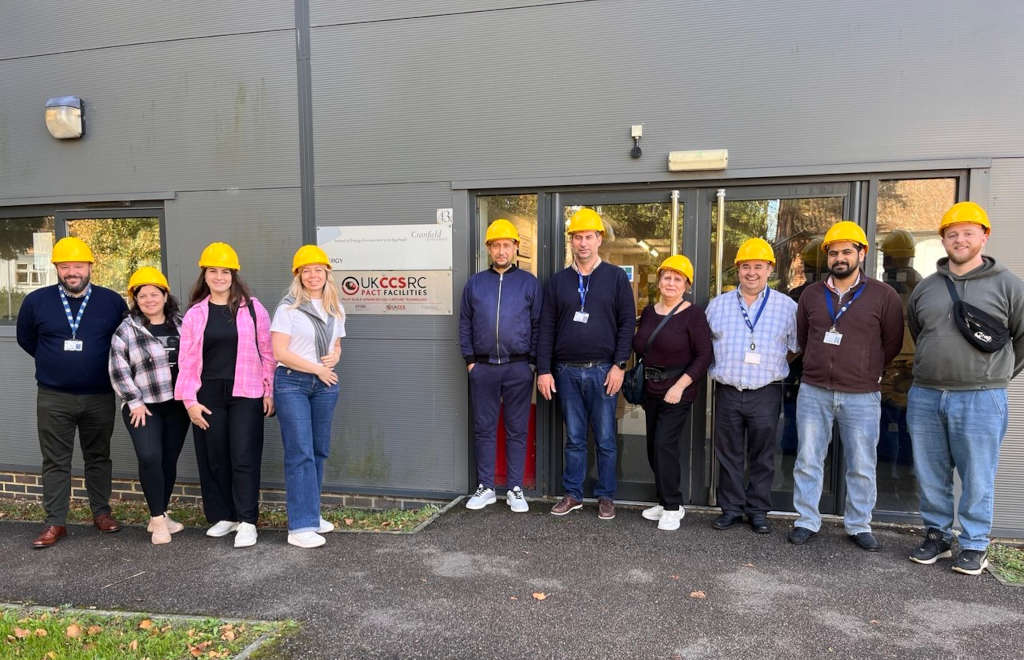
🇺🇦🇬🇧 Researchers from the Department of Geoengineering of the National Technical University of Ukraine “Igor Sikorsky Kyiv Polytechnic Institute” and Zhytomyr Polytechnic State University visited Cranfield University in the United Kingdom as part of the international SOIL4LIFE-UA project (Ukrainian-Led Twinning for Bioremediation of Post-Conflict Soils). The project aims to strengthen scientific cooperation in studying and restoring soils contaminated by military activities and human-induced environmental impacts.
The visit brought together practical training sessions, visits to modern laboratories and research facilities, scientific discussions, and strategic meetings focused on developing future international cooperation.
Particular attention was given to laboratory methods for analysing contaminated soils. The Ukrainian researchers explored techniques for measuring heavy metal concentrations using inductively coupled plasma mass spectrometry (ICP-MS) and atomic absorption spectroscopy (AAS). Together with their British colleagues, they discussed approaches to laboratory analysis of soil samples, environmental risk assessment, and the potential application of bioremediation technologies.

The delegation visited the Magan Centre of Applied Mycology (MCAM), the Cranfield Water Science Institute, the UKCRIC National Research Facility for Water and Wastewater Treatment, the Plant Growth Facility, including its laboratories and greenhouses, as well as energy and other research facilities across the university. These visits provided valuable insights into research approaches that could support the development of technologies for cleaning up and restoring contaminated areas in Ukraine.
Another important part of the programme was a three-session practical workshop on Geographic Information Systems (GIS). During the workshop, participants developed their skills in ArcGIS, created a geospatial model of a study site, and explored the WOSSAC and LandIS platforms for working with soil and spatial data.
Meetings with Cranfield University leadership and British researchers were another significant outcome of the visit. During a joint roundtable discussion, the partners explored plans for further collaborative research, the preparation of a scientific publication, progress on a joint grant proposal under Horizon Europe, and opportunities to participate in future international projects.
A central focus of the discussions was bringing together Ukrainian researchers’ direct experience of studying areas affected by war and industrial activities with the advanced analytical methods and bioremediation technologies available at Cranfield University. As a result of the ongoing full-scale war, Ukraine faces an unprecedented scale of soil contamination caused by explosive residues, detonation products, and other hazardous substances. These urgent environmental challenges, combined with Ukrainian researchers’ first-hand knowledge of affected territories and the scientific and technical expertise of their British partners, provide a strong foundation for joint research aimed at developing effective solutions for cleaning up and restoring contaminated land.
The visit marked an important step in strengthening the partnership between the three universities. It created opportunities to exchange scientific knowledge, develop researchers’ professional skills, and identify new areas for collaboration. The next steps include preparing joint scientific publications, expanding international research activities, and developing new project proposals to address Ukraine’s pressing environmental challenges.
From understanding soil contamination to developing effective restoration technologies, we are bringing together scientific expertise and international cooperation to help restore Ukraine’s land!
