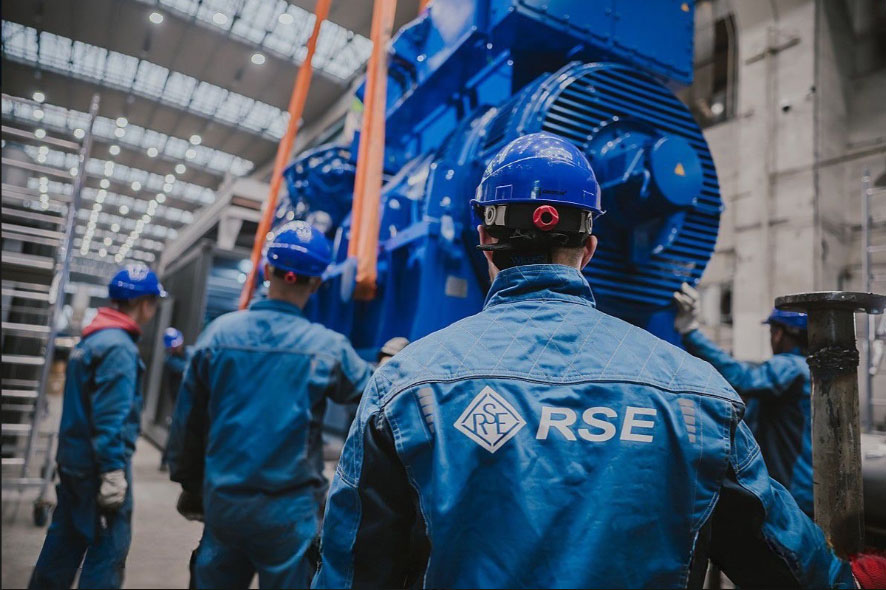

Starting next semester, Igor Sikorsky KPI will introduce a training course on cogeneration, integrated into the educational programs for training power engineers. The training course was developed in partnership with the engineering company RSE and will be implemented at the Energy Resilience Lab, a laboratory for autonomous and sustainable energy supply.
This is a full-fledged course that is part of the approved curriculum of the Educational and Scientific Institute of Nuclear and Thermal Energy at Igor Sikorsky KPI. Starting next semester, students will study it as part of the core curriculum. In the future, the discipline will be offered as an elective for students of other faculties and institutes of Igor Sikorsky KPI.
In the fall of 2025, eight teachers from Igor Sikorsky KPI, who will teach the course on cogeneration, underwent specialized training at the European training center of MWM. This allowed the course to be officially integrated into the KPI educational process, taking into account international engineering approaches.
The academic discipline consists of five compulsory modules:
The state of Ukraine's energy sector and the role of cogeneration — regulatory framework, challenges, autonomous solutions for communities and critical infrastructure.
Thermodynamic fundamentals of combined energy production — key cycles, methods of analysis and optimization.
Gas piston cogeneration systems — operating principles, operating modes, typical engineering solutions.
System design and integration — equipment selection, design, installation, and reliability requirements.
Operation, automation, and service — practical skills for working with equipment in real operating conditions.
The introduction of this discipline is an example of how university education is evolving in response to the needs of the country and the market. With the participation of RSE, Igor Sikorsky KPI integrates modern engineering practices directly into educational programs, preparing specialists for the restoration, development, and improvement of Ukraine's energy sustainability.
RSE is a key industrial partner of the program and is responsible for its practical component. The course logic, list of competencies, and training format are based on RSE's real-world experience in implementing cogeneration solutions for communities, critical infrastructure, and industrial facilities. The training course program is synchronized with the engineering standards that the industry works with today and is focused on preparing specialists who are ready to work immediately after completing their training.
The training course will be implemented at the Energy Resilience Lab, an engineering training space designed by RSE as part of the educational infrastructure of Igor Sikorsky Kyiv Polytechnic Institute. The lab is integrated into the university process and will be used directly during classroom lectures, laboratory work, and practical course modules. Students will work with simulators, training stands, and industrial equipment, practicing scenarios that engineers encounter in real energy projects.
In developing the laboratory and the content of the training course, RSE draws on the best European practices in engineering education, in particular the model of the MWM training center in Mannheim. At the same time, the course is adapted to the Ukrainian context — the challenges of wartime, the needs of local communities, and the tasks of energy recovery and decentralization.